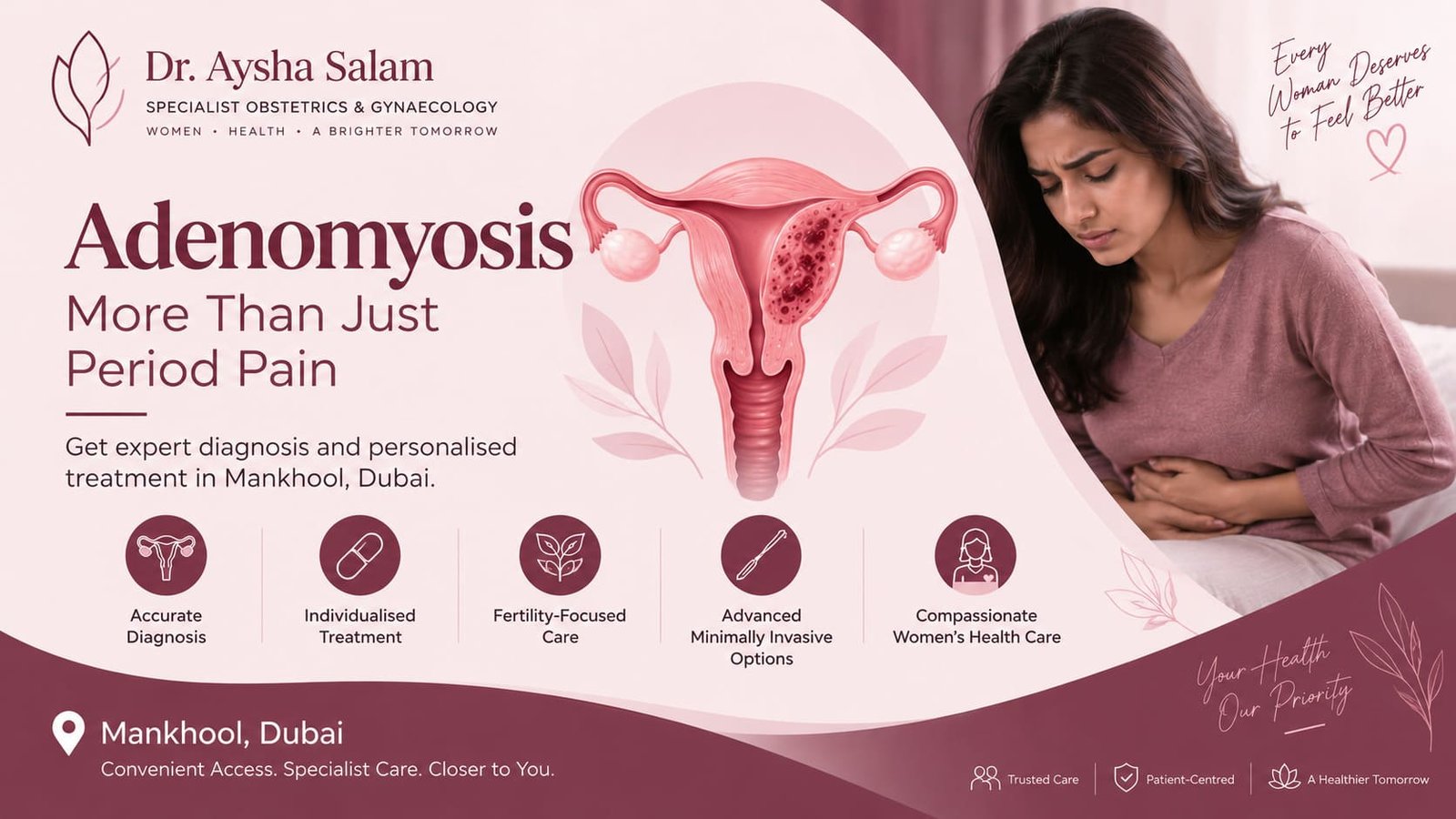
Heavy periods, severe menstrual cramps, pelvic pain, or discomfort during intercourse can sometimes be more than just “normal period pain.” One possible cause is adenomyosis, a condition in which tissue similar to the lining of the uterus grows into the muscular wall of the uterus. This can lead to painful periods, heavier or prolonged bleeding, pelvic pressure, and other symptoms that may affect everyday life.
For women looking for adenomyosis treatment in Mankhool, Dubai, an accurate diagnosis and a treatment plan based on symptoms, age, reproductive goals, and overall health are important. Dr. Aysha Salam provides gynaecological evaluation and treatment for conditions affecting the uterus and reproductive system, helping patients understand their condition and choose appropriate management options.
What Is Adenomyosis?
Adenomyosis is a condition affecting the uterus. Normally, the endometrium is the tissue that lines the inside of the uterus. In adenomyosis, this tissue grows into the muscular wall of the uterus, known as the myometrium.
The tissue continues to respond to hormonal changes during the menstrual cycle. It can thicken, break down, and bleed within the uterine muscle, contributing to inflammation, enlargement of the uterus, and pain.
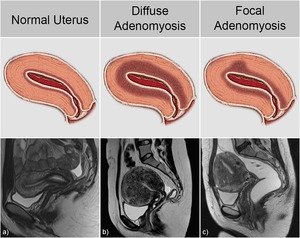
Some women with adenomyosis may have mild symptoms or no noticeable symptoms at all, while others experience significant menstrual pain and heavy bleeding. Adenomyosis is different from endometriosis. Although both conditions involve tissue similar to the uterine lining and may cause pelvic pain, they affect different areas of the body.
What Are the Symptoms of Adenomyosis?
The symptoms of adenomyosis can vary from one woman to another. Some may experience only mild discomfort, while others may have symptoms that interfere with work, sleep, exercise, or daily activities.
Common symptoms include:
- Heavy menstrual bleeding
- Long-lasting periods
- Severe menstrual cramps
- Pelvic pain
- Pelvic pressure or heaviness
- Pain during sexual intercourse
- Abdominal bloating or fullness
- An enlarged or tender uterus
Severe or progressively worsening period pain should not simply be accepted as something a woman has to live with. Persistent symptoms deserve a proper gynaecological evaluation.
What Causes Adenomyosis?
The exact cause of adenomyosis is not fully understood. Researchers have proposed several possible mechanisms, including the movement of endometrial cells into the muscular wall of the uterus and changes associated with previous uterine procedures or childbirth.
Some factors have been associated with a higher likelihood of developing adenomyosis, including previous uterine surgery and childbirth. However, adenomyosis can also occur in younger women, so age alone does not rule out the condition.
Because the symptoms of adenomyosis can overlap with other gynaecological conditions, including fibroids and endometriosis, a clinical assessment is important before deciding on treatment.
How Is Adenomyosis Diagnosed?
Diagnosis begins with a detailed discussion about your symptoms and menstrual history. Your doctor may ask about the severity of your period pain, bleeding pattern, pelvic discomfort, previous pregnancies or uterine procedures, and whether you are planning a pregnancy.
A pelvic examination may also be performed when appropriate.
Imaging plays an important role in evaluating suspected adenomyosis. Depending on the individual case, your doctor may recommend:
Transvaginal Ultrasound
A transvaginal ultrasound uses sound waves to create detailed images of the uterus and pelvic organs. It is commonly used as part of the evaluation for adenomyosis and can also help assess other possible causes of heavy bleeding or pelvic pain.
MRI Scan
Magnetic resonance imaging, or MRI, can provide detailed images of the uterus and may be recommended when additional information is needed or when the diagnosis is not clear from the initial evaluation.
Since adenomyosis can resemble other uterine conditions, the diagnosis is based on the overall clinical picture and appropriate investigations rather than symptoms alone.
When Should You See a Gynaecologist?
Consider scheduling a consultation when:
- Your periods have become noticeably heavier
- Menstrual cramps are severe or getting worse
- Period pain affects work or normal activities
- You experience ongoing pelvic pain
- You have pain during sex
- You feel persistent pelvic heaviness or pressure
- You have unusual bleeding patterns
- You are concerned that adenomyosis may be affecting fertility or pregnancy planning
You do not need to wait until the pain becomes severe before seeking medical advice. Early evaluation can help identify the cause of symptoms and discuss suitable treatment options.
What Are the Treatment Options for Adenomyosis?
There is no single treatment that is suitable for every woman with adenomyosis. Management depends on several factors, including symptom severity, age, medical history, reproductive plans, and whether fertility preservation is important.
Treatment may include medication, hormonal therapy, interventional procedures, or surgery when appropriate.
1. Medication for Pain and Heavy Bleeding
Some women can manage their symptoms with medicines prescribed by their doctor.
Non-steroidal anti-inflammatory drugs, commonly known as NSAIDs, may help reduce menstrual pain. Depending on the situation, medicines may also be used to reduce heavy menstrual bleeding.
The right medication and dosage should be determined by a medical professional based on your individual health and medical history.
2. Hormonal Treatment
Because adenomyosis is influenced by hormonal activity, hormonal treatments may help reduce pain and heavy menstrual bleeding.
Options may include:
- Hormonal intrauterine systems
- Progestogen-based treatment
- Combined hormonal contraceptives
- Other hormone-based medicines, depending on the clinical situation
Hormonal treatment can be particularly useful for women who are looking for symptom control without immediately undergoing surgery.
3. Uterine Artery Embolisation
In selected patients, uterine artery embolisation may be considered. This is an interventional procedure designed to reduce blood flow to parts of the uterus.
Whether this approach is appropriate depends on the patient’s symptoms, uterine condition, future pregnancy plans, and other clinical factors. A specialist assessment is important before considering this option.
4. Surgical Treatment
Surgery may be considered when symptoms are severe and other treatments have not provided adequate relief.
For women who have completed childbearing and have persistent symptoms despite other treatment, hysterectomy may be considered. Hysterectomy removes the uterus and provides definitive treatment for adenomyosis, but it also means that pregnancy is no longer possible.
Surgery that preserves the uterus may be considered in carefully selected cases, particularly when fertility preservation is important. The appropriate approach depends on the location and extent of adenomyosis and the individual’s reproductive goals.
Can Adenomyosis Affect Fertility?
Adenomyosis may be associated with fertility difficulties in some women, although the relationship is still being studied. It has also been associated with certain pregnancy complications.
This does not mean that every woman with adenomyosis will have fertility problems or complications during pregnancy. Women who are trying to conceive or planning a pregnancy should discuss their condition with a gynaecologist so that their individual situation can be assessed.
For women who want to preserve fertility, treatment planning should take future pregnancy goals into account from the beginning.

Adenomyosis and Heavy Periods
One of the most common concerns associated with adenomyosis is unusually heavy or prolonged menstrual bleeding.
Heavy bleeding can affect quality of life and, in some women, may contribute to iron-deficiency anaemia. Symptoms of anaemia can include tiredness, weakness, and shortness of breath.
When heavy periods are becoming difficult to manage, it is important to look for the underlying cause rather than treating the bleeding alone.
Adenomyosis vs Fibroids
Adenomyosis and uterine fibroids can sometimes produce similar symptoms, including:
- Heavy menstrual bleeding
- Pelvic pressure
- Painful periods
- An enlarged uterus
However, they are different conditions.
Fibroids are growths that develop from the muscle and connective tissue of the uterus, whereas adenomyosis involves tissue similar to the uterine lining growing within the uterine muscle.
Because symptoms can overlap, imaging and specialist assessment may be necessary to distinguish between these conditions.
Adenomyosis vs Endometriosis
Adenomyosis and endometriosis are also different conditions, even though they can cause similar symptoms.
In adenomyosis, endometrial-type tissue grows into the muscle of the uterus. In endometriosis, tissue similar to the uterine lining grows outside the uterus.
Some women can have more than one gynaecological condition at the same time, which can make diagnosis and treatment more complex.
Why Choose Specialist Gynaecological Care in Mankhool, Dubai?
Women living or working in Dubai may prefer to have their gynaecological care at a conveniently located hospital in an established medical area.
For patients searching for adenomyosis treatment in Mankhool, Dubai, specialist consultation can provide an opportunity to:
- Discuss symptoms in detail
- Understand possible causes of abnormal bleeding or pelvic pain
- Arrange appropriate diagnostic imaging
- Review medical and hormonal treatment options
- Discuss fertility and pregnancy plans
- Consider surgical options when necessary
- Develop a personalised treatment approach
The goal is not simply to treat a scan finding. Treatment should focus on the patient’s symptoms, priorities, reproductive plans, and overall wellbeing.
When Is Surgery Considered for Adenomyosis?
Not every woman with adenomyosis needs surgery.
Many women can manage their symptoms with medication or hormonal treatment. Surgery may be discussed when symptoms are severe, persistent, or significantly affecting quality of life despite non-surgical treatment.
For women who have completed their families, hysterectomy may be considered when other treatments are unsuccessful or unsuitable.
Any surgical decision should follow a detailed discussion with a gynaecologist about potential benefits, risks, alternatives, recovery, and future fertility.
What Can You Expect During an Adenomyosis Consultation?
A consultation usually begins with a detailed discussion of your symptoms and medical history.
You may be asked:
- How long have you had painful or heavy periods?
- Has the bleeding pattern changed?
- Does pain occur only during your period or at other times?
- Do you experience pain during intercourse?
- Have you had previous uterine surgery or childbirth?
- Are you currently trying to conceive?
- Do you plan to have children in the future?
- Have you previously been diagnosed with fibroids or endometriosis?
Your doctor may then recommend an examination or imaging based on your symptoms.
This structured approach helps create a treatment plan rather than relying on symptoms alone.
Consult Dr. Aysha in Dubai
Aster Hospital Mankhool
Dubai, UAE
+971 50 729 7454

Ready to Discuss Your Concern?
Frequently Asked Questions About Adenomyosis
1. Is adenomyosis serious?
Adenomyosis is a non-cancerous condition, but it can cause significant pain and heavy menstrual bleeding. In some women, prolonged heavy bleeding may contribute to anaemia and the condition can substantially affect quality of life.
2. Can adenomyosis go away on its own?
Symptoms often improve after menopause because adenomyosis is influenced by ovarian hormones. However, treatment may be needed before menopause when symptoms are affecting daily life.
3. Can adenomyosis be treated without surgery?
Yes. Depending on the patient, treatment may include pain-relieving medicines, medicines for heavy bleeding, hormonal treatment, or other non-surgical approaches.
4. Does adenomyosis always cause heavy periods?
No. Some women have adenomyosis without noticeable symptoms, while others experience heavy bleeding, severe period pain, pelvic pain, or painful intercourse.
5. Can I become pregnant if I have adenomyosis?
Some women with adenomyosis conceive naturally, while others may experience fertility difficulties. If you are planning pregnancy, discussing your condition with a gynaecologist can help with personalised planning.
6. Is adenomyosis the same as endometriosis?
No. Adenomyosis affects the muscular wall of the uterus, whereas endometriosis involves tissue similar to the uterine lining growing outside the uterus.
7. Should severe period pain be checked by a doctor?
Yes. Severe or worsening period pain, especially when it interferes with normal activities, should be evaluated by an obstetrician-gynaecologist.